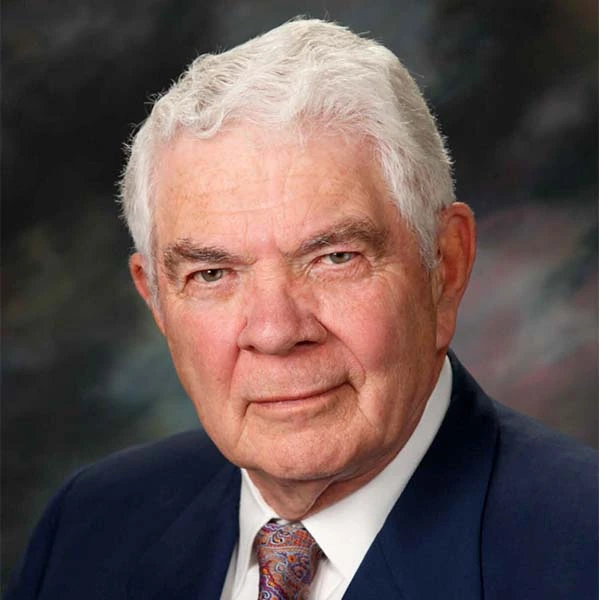
There is another important wrinkle: James Raisbeck passed away on August 31, 2021. Any site publishing a "2026 net worth" for him is necessarily working from backward-looking inferences, estate signals, or simply recycling old estimates without updating them. That does not make the research useless, but it does mean you should treat every number you encounter as an estimate tied to a specific point in time, not a live figure.
Why do estimates vary so much across sites? Three main reasons: methodology differences (some sites extrapolate from company revenue, others guess from philanthropy totals), private-asset opacity (Raisbeck Engineering was a privately held company, so its exact valuation was never disclosed publicly), and the 2016 acquisition by Acorn Growth Companies, for which the transaction details were explicitly stated as undisclosed. Without a confirmed sale price, any estimate of proceeds from that deal is speculative.
Where to find credible net worth sources and how to verify them

Start with primary sources, not aggregator sites. For someone like James Raisbeck, the most reliable paper trail comes from a handful of document types: nonprofit tax filings, real estate transaction records, business registry data, and contemporaneous press coverage of major financial events. Each of these anchors an estimate to a real number rather than a modeled guess.
ProPublica's Nonprofit Explorer is genuinely useful here. ProPublica’s blank" rel="noopener noreferrer">Nonprofit Explorer publishes searchable IRS Form 990 data and provides access to full Form 990 PDFs for organizations that file them. The James D. and Sherry Raisbeck Foundation Trust has a published EIN and annual filings that show asset totals and disbursements. Foundation assets are not the same as personal net worth, but a well-funded foundation is a concrete wealth signal. Similarly, Cornish College of the Arts publicly confirmed that Sherry Raisbeck donated $5 million in memory of James, which sets a verifiable floor on family wealth capacity after his death. That kind of documented philanthropic activity is one of the best indirect indicators available for private-wealth individuals.
Real estate records are another anchor. Washington State and King County property records are searchable and public. King County’s assessor provides an official way to look up property information in its property information tools King County property records are searchable and public. A 2024 DJC real estate dataset entry shows a King County property sale recorded February 23, 2024, for "Raisbeck Engineering Warehouse and Vacant Land" at 4411 S Ryan Way, Tukwila, WA, with a listed sale amount of $4.5 million. That is a verifiable transaction tied to the Raisbeck name, even if it reflects estate or company holdings rather than a personal asset directly.
When evaluating any net worth site, ask four quick questions: Does the page cite a specific source or methodology? Does it include a timestamp for the estimate? Does it distinguish between business value and personal net worth? And does it acknowledge uncertainty for private figures? If a page answers no to all four, treat the number as unverified.
Career and income drivers behind the estimate
James Raisbeck built his wealth almost entirely through aerospace entrepreneurship. He founded Raisbeck Engineering, a Seattle-area company specializing in performance modification systems for turbine-powered aircraft, most notably the Beechcraft King Air series. He served as CEO and Chairman for decades, and according to Purdue University's coverage, he simultaneously owned and ran both Raisbeck Engineering Inc. and Raisbeck Commercial Air Group in Seattle. Running two related aerospace businesses as the majority owner is a significant wealth concentration point.
The income picture breaks down into a few recognizable categories. First, operating income from both companies over a multi-decade career, which would include salary, distributions, and retained earnings reinvested into the business. Second, the 2016 private equity acquisition by Acorn Growth Companies, which is the single most likely source of a major liquidity event.
Even though the deal terms were not disclosed, selling a specialized aerospace engineering firm to a private equity buyer typically generates proceeds well above the company's annual revenue. Third, real estate holdings, as evidenced by the Tukwila warehouse property and likely additional holdings in the Seattle metro area. Fourth, philanthropic endowments, including the $2 million gift to Purdue (made jointly with his wife Sherry through Raisbeck Engineering Inc. ) and the foundation trust, which indicate surplus capital beyond operating needs.
What is notably absent from the public record: stock portfolios, venture investments, or other diversified financial assets. That does not mean they did not exist, but there is no documented evidence of them in publicly accessible sources. This matters because it means the estimate is anchored almost entirely to one industry and one primary business.
Assets and wealth signals worth tracking

For private-wealth individuals, you rarely get a clean asset list. Instead, you look for signals. In Raisbeck's case, several concrete ones are documented:
- Business ownership: Full or majority ownership of Raisbeck Engineering Inc. and Raisbeck Commercial Air Group, both Seattle-area aerospace companies.
- Real estate: The documented 2024 sale of a Tukwila, WA commercial warehouse and vacant land parcel tied to Raisbeck Engineering for $4.5 million (King County records).
- Philanthropic foundation: The James D. and Sherry Raisbeck Foundation Trust, with published IRS Form 990 filings available via ProPublica, showing the foundation's asset base and annual giving.
- Major charitable gifts: $2 million to Purdue University (via Raisbeck Engineering Inc.) and a $5 million gift by Sherry Raisbeck to Cornish College of the Arts following his death.
- Private equity transaction: The 2016 sale of Raisbeck Engineering to Acorn Growth Companies, a verifiable liquidity event even though transaction terms were not publicly disclosed.
Charitable giving is one of the more reliable indirect signals for private-wealth individuals. A $5 million individual gift and a separately funded foundation trust suggest a personal wealth base well into the eight-figure range, even without a confirmed sale price for the company. That is the logic behind the $10 million to $50 million working estimate: the lower bound is anchored by documented gifts and real estate; the upper bound reflects what a successful niche aerospace PE acquisition might plausibly yield, combined with decades of operating income.
Financial milestones that move the number over time
Net worth for any private individual is not a static figure. For James Raisbeck, several events almost certainly shifted the number materially, and understanding them helps you evaluate why different sources land at different estimates depending on what time period they were assessing.
- Founding and growth of Raisbeck Engineering (1970s onward): Long-term business equity buildup in a specialized, high-margin aerospace modification niche. This was the primary wealth-creation engine over his career.
- Purdue University $2 million gift (announced publicly via Purdue coverage): While a use of wealth rather than an accumulation event, it confirms significant liquidity capacity at the time of the gift.
- Raisbeck Engineering sale to Acorn Growth Companies (September 2016): This is the most significant financial milestone. A private equity acquisition of a profitable niche aerospace company is typically a multi-million dollar transaction. Raisbeck remained as Chairman after the deal, but the sale would have converted business equity into liquid or investable proceeds. Terms were not disclosed (per the PRNewswire release), but this event likely represents the peak net-worth moment.
- Death of James Raisbeck (August 31, 2021): Estate transitions can trigger asset liquidations, trust distributions, or charitable transfers that alter how wealth is held and measured.
- Post-death real estate sale (February 2024): The $4.5 million Tukwila commercial property sale suggests estate asset liquidation was still ongoing more than two years after his death, which is consistent with a moderately complex private estate.
- Sherry Raisbeck's $5 million Cornish gift (post-2021): The family's continued philanthropic capacity after his death signals that the estate retained substantial wealth.
Common myths and mistakes when researching net worth

The biggest mistake people make is treating a number on a net worth aggregator site as a researched figure. If you are trying to evaluate James Renner net worth specifically, use the same approach: confirm sources and timestamps rather than relying on template figures net worth aggregator site. Most of those sites use automated templates, pull from each other's data, and rarely update when circumstances change. For someone like James Raisbeck, who has been deceased since 2021, many sites will still show a present-tense "net worth" as if he were actively earning and filing disclosures. That is a red flag, not a feature.
A second common myth is conflating company revenue with personal net worth. Raisbeck Engineering's annual revenue as a specialized aerospace firm does not translate directly into personal wealth. Business owners typically draw a salary, take distributions, and retain equity, but the equity only converts to real wealth upon a sale or liquidation event. Citing a company's revenue as a net worth figure is a methodological error.
Third, people often assume philanthropy represents the bulk of net worth rather than a portion of it. A $5 million gift to Cornish is evidence of wealth, not a ceiling on it. Philanthropists rarely give away the majority of their estate in a single transaction. Similarly, assuming the Raisbeck Foundation's asset base equals personal net worth ignores the separation between foundation assets (legally transferred out of personal ownership) and remaining personal or estate holdings.
Finally, for private business owners, the lack of a Forbes or Bloomberg listing does not mean wealth is minimal. Those indexes primarily track publicly traded equity and known private billionaires. Someone with $20 to $40 million in a private business and real estate may never appear on a wealth ranking, yet that is genuinely substantial wealth by any standard measure. This is worth keeping in mind when comparing James Rasteh's net worth or other private-sector figures where disclosed filings are similarly limited.
How to estimate net worth yourself
If you want to build your own sanity-check estimate for James Raisbeck (or any private-wealth individual), here is a practical framework that works with publicly available data:
- Identify the primary business and approximate its value. For Raisbeck Engineering, look at comparable private aerospace modification companies. PE acquisition multiples for niche industrial businesses typically range from 5x to 10x EBITDA. Without disclosed financials, this is a range, not a precise figure.
- Find documented transactions. The 2016 Acorn acquisition and the 2024 real estate sale are both documented. Use those as anchors.
- Check nonprofit filings. ProPublica's 990 explorer will show you the Raisbeck Foundation's total assets and annual disbursements. Treat foundation assets as a lower-bound wealth signal, not a total.
- Review philanthropic gifts. Add up known confirmed gifts ($2 million to Purdue, $5 million to Cornish, plus any foundation grants) as a documented minimum outflow from accumulated wealth.
- Look for real estate records. King County, WA property records are searchable. Any properties held personally would add to the total.
- Cross-reference press coverage. AOPA, Purdue, Business Wire, and Puget Sound Business Journal all published verified coverage of Raisbeck's career and business events. Use those to confirm timeline and roles, not to generate numbers.
When applying this framework, watch for these red flags that signal an unreliable estimate: no source or methodology cited, a present-tense figure for a deceased individual without noting the estate context, revenue figures presented as personal net worth, and round numbers ($10M, $20M, $50M) with no supporting calculation. A credible estimate will acknowledge its own uncertainty.
As a rough working model, the publicly documented evidence supports something like this breakdown for James Raisbeck's peak net worth, prior to his death:
| Wealth Component | Estimated Range | Evidence Quality |
|---|
| Raisbeck Engineering sale proceeds (2016) | $10M – $40M | Moderate (transaction confirmed; terms undisclosed) |
| Raisbeck Commercial Air Group equity | $1M – $5M | Low (no direct valuation data) |
| Real estate holdings (commercial and personal) | $3M – $8M | Moderate (one $4.5M sale documented) |
| Foundation and philanthropic endowments | $5M+ documented gifts | High (public confirmations) |
| Other investments or savings | Unknown | No public data |
Totaling the documented and reasonably estimated components gives a range of roughly $20 million to $55 million at peak, with the lower bound the more defensible figure given the absence of disclosed transaction terms. That is where the working estimate of $10 million to $50 million comes from, and it is the most you can responsibly say without guessing. For context on how other private-sector figures in this space are researched, the methodology used here is similar to what you would apply when researching someone like James Edward Alexander Rundell Guinness, where private business stakes and philanthropy are the primary signals rather than public filings.