
Tex Ritter's net worth is most credibly estimated at somewhere between $5 million and $10 million in today's dollars, accounting for his career earnings across radio, Broadway, film, and recorded music, plus the ongoing royalty value attached to his catalog. Some aggregator sites push that figure as high as $20 million, but those numbers are not backed by estate records or probate documents, and the lower end of the range is more defensible given what we actually know about how he earned and what he left behind.
Tex Ritter Net Worth: Estimate, Income Sources, Assets

Marcus Rothschild
16 Apr 2026
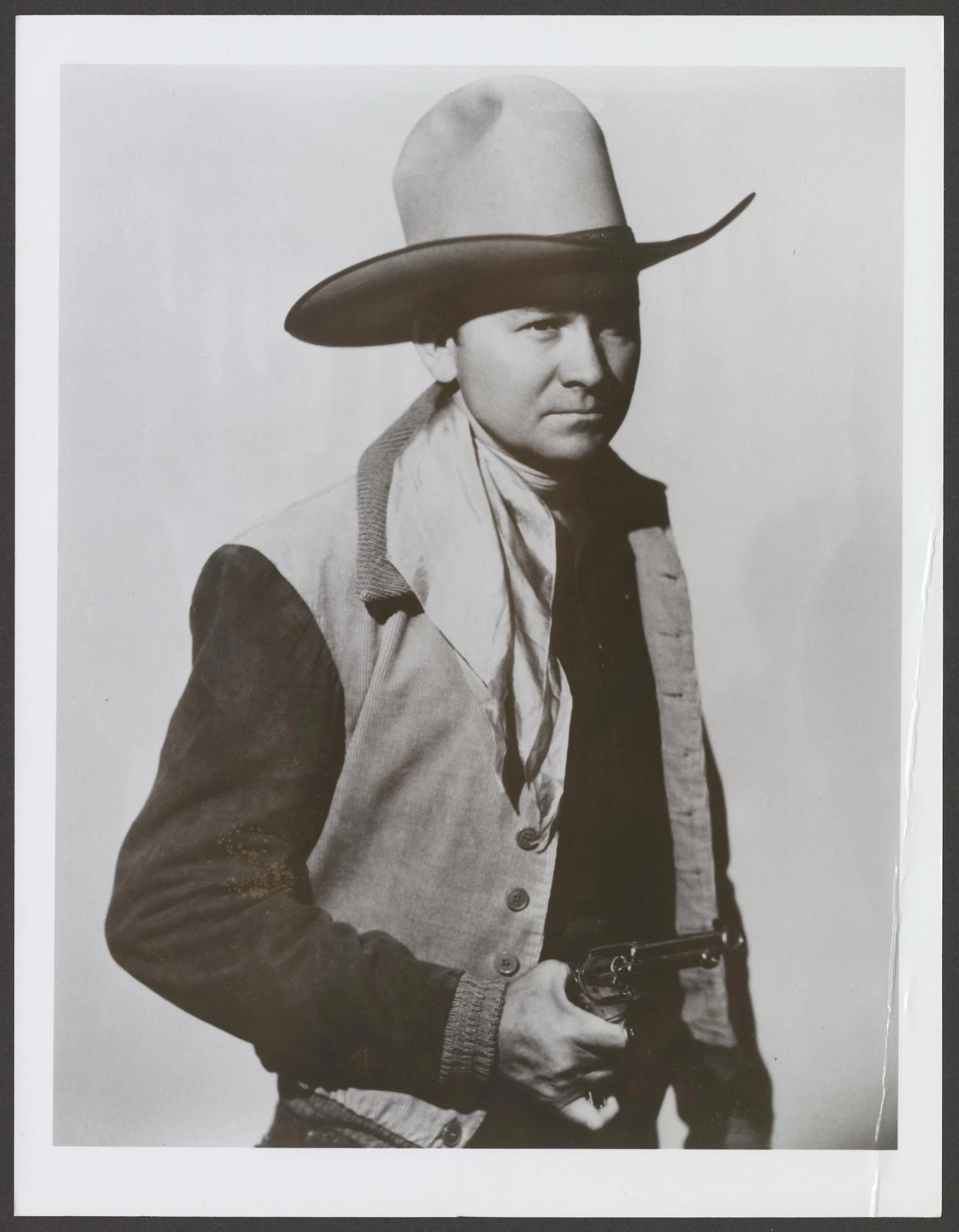
Who Tex Ritter was and why people search his net worth

Tex Ritter (full name Woodward Maurice Ritter, born January 12, 1905, died January 2, 1974) was a country music singer and actor who built a career across nearly every entertainment medium available in his era. He started on radio in Houston at KPRC in 1928, making him arguably the first radio cowboy singer in the United States according to TCM's profile of him. From there he moved to Broadway, then to Hollywood, and eventually to Nashville, where he joined the Grand Ole Opry in 1965. He starred in more than 70 motion pictures, beginning with Song of the Gringo in 1936. He was inducted into the Country Music Hall of Fame in 1964, roughly a decade before his death. A University of North Texas digital PDF on the Texas Country Music Hall of Fame says Tex Ritter was inducted into the Country Music Hall of Fame in Nashville about 10 years before his death, and it also notes he joined the Grand Ole Opry in 1965 and remained a member until his death blank" rel="noopener noreferrer">inducted into the Country Music Hall of Fame in 1964.
People land on net-worth searches for Tex Ritter for a few different reasons. Some are general fans curious about how lucrative a 1930s–1960s singing-cowboy career actually was. Others stumble here while researching his son, John Ritter, the well-known TV actor. And a small number may genuinely be confused between Tex Ritter the entertainer (1905–1974) and Goebel Franklin "Tex" Ritter (1924–2004), a basketball figure who shares the same nickname and surname. Wikipedia maintains a disambiguation page for exactly this reason, so if you are researching the basketball Tex Ritter, the entertainer's financial profile is not the right place to look. This article is entirely about the country music and film entertainer.
The most credible net worth estimate and why it's a range
Two figures circulate widely online. Celebrity-Birthdays.com pegs Tex Ritter's net worth at $5 million, framing it as a synthesis across Wikipedia, Forbes, and Business Insider as of late 2023. A separate aggregator site lists $20 million for 2026, with a suspiciously smooth upward trend: $14 million in 2022, $16 million in 2023, $18 million in 2024, now $20 million. That kind of mechanical year-over-year increase is a red flag. No estate or trust administrator is issuing annual updates on Tex Ritter's holdings, and no royalty accounting has been publicly released to justify that trajectory. The $20 million figure looks like an algorithmically inflated number rather than a researched estimate.
The $5 million figure is more grounded but still an estimate, not a probate valuation. A reasonable working range is $5 million to $10 million in present-value terms, reflecting his music royalty catalog, film residuals, the ongoing commercial value of his most famous recording (the Oscar-winning "Ballad of High Noon"), and whatever real estate and personal assets transferred through his estate after 1974. If you need a single number for reference, $5 million to $7 million is the most defensible midpoint based on available public information.
How he made money: a career earnings timeline

Ritter's income story has several distinct phases, and tying the timeline to the money is the most useful way to understand where the estimate comes from.
Radio and Broadway (1928–1935)
His professional career started at KPRC Houston in 1928. He later wrote and starred in radio shows including Cowboy Tom's Roundup on WINS in New York in 1933. Radio work in that era was modestly paid by today's standards, but it was steady professional income and, more importantly, it built the name recognition that made his film career possible. Broadway appearances added to his profile without generating the kind of recurring revenue that film and recording would later provide.
Film career (1936–1960s)

Signed by producer Edward Finney, Ritter made his first starring film, Song of the Gringo, in 1936. He went on to appear in more than 70 pictures, primarily B-westerns that were produced on tight budgets but released in volume. B-western actors in that era typically earned flat per-picture fees rather than backend participation, meaning the income was consistent but not the kind of deal that creates generational wealth on its own. Still, 70-plus pictures over roughly three decades represents a substantial cumulative paycheck.
Recording career peak (1944)
Ritter recorded for Columbia, Decca, and Capitol across his career. His commercial peak on the charts came in 1944, when blank" rel="noopener noreferrer">"I'm Wastin' My Tears on You" reached number one and stayed there for six weeks, spending 20 total weeks on the charts. That kind of chart performance in the 1940s translated into jukebox play, sheet music sales, and radio airings, all of which generated royalties. It is one of the clearest documented income-driving events in his biography.
High Noon and the 1952 revival
The single biggest financial event in Ritter's later career was almost certainly "The Ballad of High Noon (Do Not Forsake Me, Oh My Darlin')," which he performed over the opening credits of the 1952 film High Noon. The song won the Academy Award for Best Original Song that year. TCM notes that the High Noon song gave his career a significant boost, and that renewed visibility almost certainly led to new recording contracts, higher concert fees, and long-tail royalty income that would have continued well past his 1974 death. For anyone trying to understand where the multi-million-dollar estimates come from, the High Noon royalty stream is the most plausible anchor.
Nashville era and institutional recognition (1964–1974)
Ritter moved to Nashville and joined the Grand Ole Opry in 1965, a year after his Country Music Hall of Fame induction in 1964. He also ran unsuccessfully for the U.S. Senate from Tennessee in 1970. His Nashville years kept him active in the industry and involved in the preservation of country music's institutions, but this phase of his career was more about legacy than peak earning power. He died on January 2, 1974.
Assets, holdings, and how his estate was likely structured
Specific probate records and estate inventories for Tex Ritter are not publicly available in the way that, say, a living public figure's disclosed assets might be. What the biographical record does give us are some concrete reference points. Ritter married actress Dorothy Fay on June 14, 1941, and they had two sons: Thomas and John (the future TV star). After Tex Ritter died in 1974, Dorothy Ritter relocated to the family ranch in Burbank to be closer to their son John, which places at least one identifiable real property in the estate. Local biographical accounts also reference a two-story white home associated with his earlier years. These are not ledger entries, but they confirm that real estate formed part of his asset base.
Beyond real estate, the most structurally important asset class for a musician of his era is the music publishing and royalty catalog. Rights to recordings from Capitol and his other labels, as well as any publishing interests he held in compositions, would have continued generating income after death and would have transferred to his estate and heirs. The ongoing commercial use of "The Ballad of High Noon" in particular, including its appearance in retrospective film programming and licensing, represents a durable asset. Whether those rights remained with the Ritter estate, were sold, or passed to a publisher is not documented in public sources, but the existence of the catalog as a wealth driver is well-supported.
It is also worth noting the broader context of how entertainment fortunes from this era were often structured. As a useful parallel for comparison, readers interested in how entertainment and public-figure wealth gets built and maintained might look at figures like Tyler Ritter's net worth, which illustrates how even a famous family name does not automatically translate into comparable financial accumulation across generations.
Financial risks and what could bring the number down
Several factors could make the real figure lower than the estimates suggest. First, B-western film contracts in the 1930s and 1940s were typically flat-fee arrangements with no residuals, so the 70-plus films likely generated less lifetime income than a modern film deal would. Second, recording contracts of that era heavily favored labels over artists on royalty splits, which means Ritter may have received a smaller percentage of sales revenue than his chart success would imply. Third, his 1970 Senate campaign cost money and produced no offsetting income. Fourth, the estate has been closed for over 50 years, and without updated public documentation, any present-value calculation involves compounding assumptions about how assets were managed, whether royalty rights were sold or retained, and how inflation adjustments are applied.
None of the public-facing net-worth sites cite primary financial documents, which means every estimate carries meaningful uncertainty. The $20 million figure in particular shows no documented basis that would justify it being nearly four times the alternative $5 million estimate from other aggregators. Readers should treat all figures as informed approximations, not audited results.
How to verify net worth estimates and spot bad sources
Net worth figures for historical entertainment figures like Tex Ritter are notoriously difficult to verify because no single authoritative source publishes them. Here is a practical framework for assessing what you find.
- Check whether the source cites a primary document: Probate records, estate filings, royalty disclosures, or published financial statements are the gold standard. If a site says "according to our analysis" without linking to any of those, it is an estimate based on other estimates.
- Look for mechanically trending numbers: If a net worth increases by exactly $2 million every year in a straight line, that is almost certainly an algorithm, not a researcher. Real estate values, royalty income, and catalog valuations do not move that smoothly.
- Cross-reference against career history: Does the estimate make sense given what you know about how the person earned money? For Ritter, a $5–10 million range aligns with a multi-decade entertainment career anchored by a famous Oscar-winning recording. A $20 million figure would require additional undocumented sources of wealth.
- Use authoritative biographical sources for career context: The Country Music Hall of Fame biography, Britannica, and TCM profiles are more reliable for establishing career milestones than net-worth aggregator pages. Anchor your estimate to the career record, then reason about income from there.
- Search for estate or probate records: In the United States, probate records are often public. For a 1974 death, some county court records may be accessible through local courthouse archives or ancestry/genealogy databases. This is the most direct way to find documented estate values.
- Be aware of name confusion: As noted above, at least one other person named "Tex Ritter" (the basketball player, 1924–2004) exists. Make sure any source you are reading is specifically about the entertainer. Wikipedia's disambiguation page is a quick sanity check.
For a useful contrast in how net worth research works for public figures with more documented financial footprints, compare the approach used for someone like Rex Tillerson's net worth, where corporate filings and SEC disclosures provide a verifiable baseline. Historical entertainers like Ritter simply do not have that kind of paper trail, which is why ranges and source transparency matter more.
It is also worth understanding that even well-researched celebrity net worth figures often rely on third-party estimates rather than primary documents. A detailed look at someone like Ron Tutor's net worth shows how construction and business earnings can be cross-referenced against disclosed contracts and company filings, a luxury that simply does not exist for mid-20th-century entertainers.
Putting the numbers side by side

| Source | Estimate | Basis Cited | Reliability Assessment |
|---|---|---|---|
| Celebrity-Birthdays.com | $5 million | Synthesis of Wikipedia, Forbes, Business Insider (as of Dec 2023) | Low-to-moderate; no primary document cited but cross-referenced across sources |
| Net-worth aggregator (The Most 10) | $20 million (2026) | Not cited; shows $2M annual increase since 2022 | Low; mechanical trend with no documentary support |
| Research-based estimate (this article) | $5M–$10M range | Career earnings, chart history, royalty logic, biographical real estate references | Moderate; inference from documented career record |
| Probate/estate record | Not publicly available | N/A | N/A — the most reliable source type, but not accessible for this estate |
The bottom line is that a $5 million to $10 million range is the most honest answer to the Tex Ritter net worth question as of 2026. The lower bound is supported by at least one aggregator's cross-referenced estimate. The upper bound is a reasonable inference from a career that included an Oscar-winning song, a 70-plus film catalog, multiple chart-topping recordings, and decades of active performing. Anything above $10 million currently lacks documented support.
For readers interested in similar profiles from different corners of the public-figure wealth universe, you might find it useful to look at how inherited status and legacy wealth work in cases like Harrison Ruffin Tyler's net worth, which involves historical family legacy translating into present-day asset value, a dynamic not entirely unlike what happens with a deceased entertainer's royalty catalog. And for those curious about how franchise-based business earnings stack up against entertainment income, the profile of Ray Titus's net worth offers a useful comparison point. Finally, if you came across a reference to a "Tex Ritter" in a different context and want to rule out confusion with similarly named individuals, the brief profile of Rex Tullius's net worth is a reminder that name-matching errors are common in net worth research and worth ruling out before drawing conclusions.
FAQ
Why do different websites give wildly different Tex Ritter net worth numbers?
Most reputable pages will not agree on a single figure because Tex Ritter’s estate paperwork and royalty ledgers are not publicly available. What you can do instead is treat the “range” as a present-value working estimate, then focus on whether any cited number explains its method (for example, tying it to known royalty-driving milestones like the “High Noon” Oscar song).
What single Tex Ritter net worth number should I use for a quick reference?
Yes. If you want one number for quick comparisons, the article’s safest midpoint is about $6 million (within the $5 million to $7 million zone). Avoid using a single “all-in” figure like $20 million unless you can find a documented asset list or a verifiable royalty accounting basis, neither of which is available in public sources.
Does “net worth” for a historical entertainer mean liquid cash he had at death?
The term “net worth” here should be understood as an estimate of total value minus assumed debts and liabilities, not a snapshot of cash. For a deceased entertainer, the biggest driver is typically ongoing rights value (music publishing, recording royalties, and licensing), while filmed-fee earnings from B-westerns are less likely to create long-term wealth because the contracts of that era often lacked residuals.
How can anyone estimate Tex Ritter net worth if estate records are not public?
Not in the way modern celebrities’ wealth is often tracked. Because Ritter’s estate is long closed, you generally cannot reconstruct an exact equity statement today. Any estimate you see is inferred from career output, typical contract structures, chart performance, and the likelihood of enduring rights, so methodology matters as much as the final dollar amount.
How do chart numbers actually affect a musician’s royalty income decades later?
Chart success does not translate into equal income for every era of recording. The article points to a clear financial anchor in 1944 for “I’m Wastin’ My Tears on You,” but the monetization path depends on who owned masters, how radio and jukebox plays were licensed, and what royalty splits were negotiated with labels at the time.
Why is “The Ballad of High Noon” such a big factor in net worth estimates?
For Ritter, the “High Noon” Academy Award song is the strongest reason to expect long-tail value, but not all of that value necessarily belongs to the estate in the same form forever. Rights could have been sold, reassigned, or administered by publishers, so two estimates can differ just because they assume different ownership chains or different remaining copyright term value.
How can I tell if a Tex Ritter net worth estimate is being “updated” in a credible way?
You should be cautious if a site updates the number every year with smooth increases. A mechanical year-over-year climb (especially one that implies compounding without explaining royalty statements, ownership changes, or valuation method) is usually a sign of automated inflation rather than a refreshed valuation based on new facts.
Do reported homes and ranch references strongly change the Tex Ritter net worth estimate?
Real estate can be meaningful, but the effect on net worth is limited if the property was modest, jointly held, or already encumbered. The article notes biographical references to residences and the ranch area placement after his death, but without an appraisal or transfer details you cannot reliably size it as a component of the final valuation.
What’s the best way to avoid confusing Tex Ritter with similarly named people?
If you are researching “Tex Ritter” and you also mean John Ritter’s father, you are on the right person. But there is a common mix-up with Goebel Franklin “Tex” Ritter (the basketball figure). Any net worth figure you find should be checked against birth and death dates to confirm it matches the 1905 to 1974 entertainer.
Did Tex Ritter’s 1970 Senate campaign increase his wealth?
The Senate run is unlikely to be a wealth generator. It may have caused expenses and distraction, so for net worth estimates it’s typically more relevant as a cost factor than an income factor, and it is usually not treated as a major asset source.
What checks should I do before trusting any Tex Ritter net worth website?
For mid-century entertainers, online “net worth” figures often rely on secondhand aggregation rather than primary documents, so you should look for transparency: the cited sources, whether they explain a calculation method, and whether they separate one-time earnings from long-term rights value. If those elements are missing, downgrade confidence even if the number seems plausible.